
Table of Contents
- Understanding Foot Width Measurements and Boot Sizing
- Square Toe vs. Round Toe for Wide Feet
- Top Affordable Western Work Boots for Wide Feet
- Comparison Table and Pricing Breakdown
- How to Break In New Western Work Boots
- How to Stretch Western Boots for Maximum Comfort
- Key Features to Look for in Wide Boots
- Frequently Asked Questions
Last Updated: October 2, 2026
Understanding Foot Width Measurements and Boot Sizing
Finding the best affordable western work boots for wide feet requires knowing your actual width measurement and matching it to boots designed for wider feet from the start, not just grabbing a half-size larger, which leaves excess heel space and blisters.
Width in western boots is measured in letters: D (standard), EE (wide), EEE (extra wide), and 4E (double extra wide). Each width category represents roughly a half-inch increase in the boot's overall toe box volume and instep height.

A properly fitted wide boot distributes pressure evenly across your foot, reducing heel slippage, preventing blisters, and supporting your arch, whether you're spending eight hours in the saddle or working on the ranch.
How to Measure Your Foot Size at Home
The most accurate way to measure your foot width is with a ruler or measuring tape and a piece of paper. Place your foot flat on the paper, mark the widest point across your foot with a pen, then measure the distance between those marks. This gives you your actual foot width in inches.
Most feet measure between 3.5 and 4.5 inches wide. Standard D-width boots fit feet around 3.5 to 3.75 inches; EE-width boots fit 3.75 to 4.0 inches; EEE and 4E boots fit feet wider than 4.0 inches. Measure your foot, the extra two minutes saves you from ordering boots that won't fit.
Also measure your foot length from heel to longest toe. Western boots typically run a half-size small compared to everyday shoes, so if you wear a size 10 in sneakers, you'll likely wear a 10.5 or 11 in western boots.
Wide vs. Extra Wide: Decoding 2E, 4E, and EEE Sizing
Width labels follow a standardized system: 2E (also written EE) is the first wide width; 4E is the next step up, offering significantly more room in the toe box and instep.
For most people with genuinely wide feet, 2E (EE) width provides comfortable room without excess fabric bunching. If you have very wide feet or high arches, jump to 4E.
"Wide calf" addresses leg circumference, not foot width. Some boots offer both wide foot and wide calf sizing, ideal if you have thick calves or muscular legs. A wide calf boot with standard foot width won't solve a pinched toe problem.
Square Toe vs. Round Toe for Wide Feet
Square toe boots offer noticeably more room in the toe area compared to round toe designs, reducing pressure on your pinky toe and giving your foot room to spread naturally.
Round toe boots taper toward the point, which crowds wide feet and causes compression by hour six of wear. If you have genuinely wide feet, square toe is a practical necessity, not just a style preference.
The roper style (a modified square toe with a slightly rounded edge) splits the difference. It gives you more room than a traditional round toe while looking less blocky than a full square toe. Many people with wide feet find this the sweet spot for both comfort and appearance.
Top Affordable Western Work Boots for Wide Feet
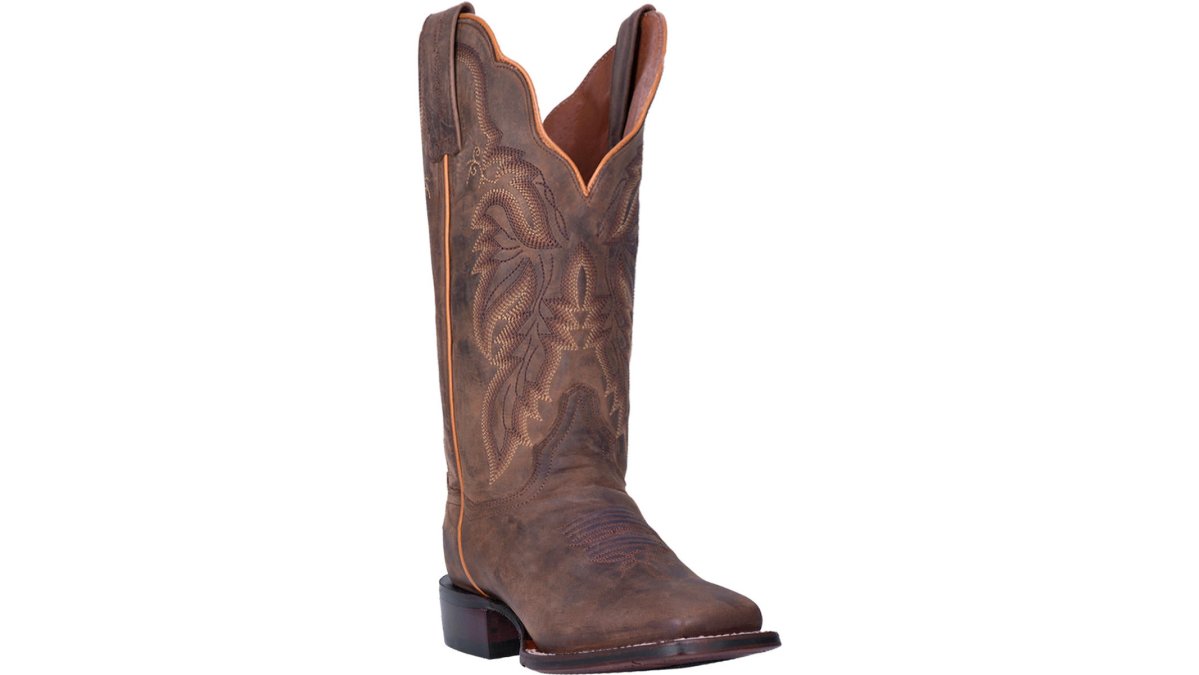
Dan Post Women's Brown Western Boots - Wide Square Toe
These boots deliver genuine wide-foot accommodation at an accessible price point. The full-grain leather breaks in quickly, the 12-inch shaft provides solid ankle support, and the wide square toe gives your foot room to breathe.
At $214.95, full-grain leather develops character over time, the rubber outsole grips reliably on varied terrain, and the 1-inch stockman heel is standard for western work. The leather lining wicks moisture better than synthetic alternatives.

Best for: Women needing straightforward, comfortable wide-foot boots for daily wear
Women's Reva Leather Wide Calf Boot by Dan Post
The Reva addresses both foot width and calf circumference. Available in honey or black leather, the 12-inch shaft with decorative stitching adds visual interest.
At $179.95, this is the most affordable option. The snip toe (a rounded point rather than a full square) offers width accommodation without the blocky square-toe look.
The wide calf fit is the real differentiator. If your calves have been the limiting factor in boot shopping, this addresses that directly.
Best for: Women with wide feet and thicker calves who want style and affordability combined
Women's Coyote Creed Wide Calf Leather Boot by Dan Post
The Coyote Creed stands out with striking red leather and intricate feather design. The wide calf fit accommodates both your foot and leg, and the 12-inch shaft with decorative feather work makes a statement.
Dan Post Women's Brown Western Boots - Wide Square Toe →
At $194.95, the red leather and hand-stitched craftsmanship justify the price. The snip toe gives width room without looking overly utilitarian.
Best for: Women wanting decorative western style without compromising on wide-foot comfort
Mens Abilene 11″ Tan Bison Stockman Heel
The Abilene delivers premium bison leather at a reasonable price.
At $239.95, this boot represents genuine value. The 11-inch shaft suits most men's proportions, and the wide round toe provides ample room.
Made in the USA, the rubber outsole handles ranch work, trail riding, and everyday wear.
The broad toe (another term for wide round toe) means your foot has genuine space.
Comparison Table and Pricing Breakdown
| Boot | Price | Width | Toe Style | Shaft Height | Best For | Key Feature |
|---|---|---|---|---|---|---|
| Dan Post Women's Brown Square Toe | $214.95 | Wide | Square | 12" | Daily work and casual wear | Full-grain leather, value price |
| Dan Post Reva Wide Calf | $179.95 | Wide calf | Snip | 12" | Wide calf fit needed | Most affordable option |
| Dan Post Coyote Creed Wide Calf | $194.95 | Wide calf | Snip | 12" | Rodeo and stylish wear | Red leather with feather design |
| Abilene 11″ Tan Bison | $239.95 | Wide | Round | 11" | Ranch work and riding | Premium bison leather, made in USA |
All four boots are available at Lazy B Western Wear & Tack. The price range spans from $179.95 to $239.95, giving you options at different budget levels. Full-grain leather, cushioned footbeds, and rubber outsoles appear across the entire range.

How to Break In New Western Work Boots
New western boots need a break-in period of 10-15 hours of actual wear before they feel truly comfortable.
How to Stretch Western Boots for Maximum Comfort
If your new boots feel slightly tight after break-in, stretching can help.
Materials That Offer Natural Stretch
Full-grain leather stretches more readily than corrected-grain or synthetic leather.
Bison leather stretches slightly less than cowhide.
Removable Insoles and Footbed Cushioning
All four boots include cushioned footbeds with removable insoles. A removable insole lets you swap in custom orthotics or replace the stock insole with a thinner option to create more toe-box room.
Quality cushioned footbeds support your arch and reduce fatigue.
Key Features to Look for in Wide Boots
Full-Grain Leather and Durability
Full-grain leather is the gold standard for western boots. The entire surface of the hide is preserved, including the natural grain pattern, making each boot unique.
Heel Slippage Prevention and Arch Support
Heel slippage, when your heel lifts out of the boot with each step, is one of the most common complaints from people in poorly fitted boots. It causes blisters, wastes energy, and makes riding uncomfortable. Wide boots prevent slippage by filling the heel area properly.
Frequently Asked Questions
What is the difference between wide (2E) and extra wide (4E) western work boots?
Wide boots (2E) provide modest extra room across the forefoot and instep, while extra wide (4E) and EEE sizes offer significantly more volume throughout the toe box and heel. For wide feet, measure your foot width at home and compare it to the boot's internal dimensions. Dan Post and Abilene both offer wide and extra-wide options. If your foot width exceeds standard measurements, start with 4E sizing to avoid heel slippage and pressure points during long work days.
Are square toe boots better for wide feet than round toe?
Square toe boots typically provide more room in the toe box, making them the preferred choice for wide feet. The squared-off design creates additional volume without adding bulk. Round toe boots have a narrower toe chamber, which can feel constricting if your foot is wider. The Dan Post Women's Brown Western Boots feature a wide square toe specifically designed for this purpose, offering both comfort and authentic western styling for riders and ranch workers.
How long does it take to break in western work boots for wide feet?
Most quality western work boots require 2 to 4 weeks of regular wear to break in properly. For wide feet, the break-in period may extend slightly as the leather molds to your foot's shape. Full-grain leather, used in boots like the Abilene Tan Bison models, softens gradually with wear. Wear your boots for short periods initially, 2 to 3 hours daily, then gradually increase duration.
What should I look for when choosing affordable western work boots for wide feet?
Prioritize full-grain leather for durability, a cushioned footbed for shock absorption, and removable insoles for customization. Check the toe box volume, square toe designs offer more room than round toe. Look for boots with arch support and heel slippage prevention. The Dan Post Women's Reva Wide Calf Boot at $179.95 and the Abilene Tan Bison at $249.95 both deliver quality construction and genuine wide-foot accommodation without premium pricing. Verify your foot width at home before ordering to ensure proper fitment.
Can I stretch western boots if they feel tight?
Yes, full-grain leather western boots can be stretched, especially in the calf and shaft areas. Wear them with thick socks to gradually stretch the leather, or use a boot stretcher designed for western styles. Removable insoles allow you to replace them with custom orthotics if needed.