
Table of Contents
- Barrel Racing Tack: The Complete Checklist
- How to Choose a Barrel Racing Saddle
- Types of Bits for Barrel Racing
- Best Leg Protection for Barrel Racing Horses
- Saddle Pads, Cinches, and Stirrups That Hold Up
- Budget-Conscious vs. Professional-Grade Tack
- Tack Troubleshooting for Common Behavioral Issues
- Conclusion: Build Your Tack Set With Confidence
- Frequently Asked Questions
Last Updated: October 3, 2026
Barrel Racing Tack: The Complete Checklist
Barrel racing is decided by fractions of a second, and the right essential western tack for barrel racing keeps a horse balanced through a hard turn instead of fighting the rider for control. At Lazy B Western Wear & Tack, gear that fits correctly makes a faster, safer run possible.
What You Need Before You Run
A barrel run asks your horse to accelerate, rate, and pivot within seconds. The core checklist for a competitive set:
- A barrel racing saddle built with a narrow enough fit to let your horse move freely
- A contoured saddle pad and a cinch that will not trap heat
- A headstall, bit, and reins matched to your horse's training stage
- A breast collar to keep the saddle from sliding during hard turns
- Front and rear leg protection, plus bell boots if your horse overreaches
- Spurs sized to your leg and your horse's response level
How to Choose a Barrel Racing Saddle
Start with fit, not looks. A barrel saddle should sit level on your horse's back, clear the withers, and let you shift your weight without fighting the horn. A saddle that restricts the shoulder or pinches the loin changes how the horse rates, turns, and accelerates.
The Four Measurements That Decide Everything
- Gullet width and bar angle. The bars must match your horse's conformation. A narrow, steep-angled bar on a wide, mutton-withered horse creates pressure points along the spine; a wide, flat bar on a narrow horse lets the saddle rock and bridge. The correct width is determined by your horse's wither tracing, not the advertised size.
- Seat size and depth. A slightly deeper seat helps you stay centered through a turn, but too much depth locks your hips and slows your reaction to the horse's rate.
- Skirt length and rigging position. A shorter, rounder skirt lets the horse's hip and shoulder move freely. A 7/8 or 3/4 rigging position pulls the cinch back off the shoulder, letting the front leg reach through a turn without the saddle catching it.
- Horn size and placement. A barrel horn gives you a handhold when you sit down and rate, not a place to dally a rope. A horn that is too tall or too far back will catch your hand when you lean into the first barrel.
How Saddle Geometry Changes the Run
When a horse turns a barrel, it drops its inside shoulder, plants the inside hind foot, and drives across the turn.
The tree carries this load. A poorly made tree with uneven bars will bridge or rock no matter how good the pad is. That is why a saddle can fit perfectly at a standstill and still shift at speed, and why the breast collar matters as much as the saddle.
Matching the Saddle to the Horse's Stage
- Green horse learning the pattern. Prioritize a forgiving fit and a flatter seat. You will be sitting up and correcting more than leaning, and a deep seat will fight you.
- Finished horse running for time. A deeper seat and a forward-set horn let you sit down and rate without losing your balance.
- Older horse with a changing back. Re-check the gullet and bar angle every season. A horse that has lost topline muscle needs a wider gullet and a more contoured pad, or the saddle will start bridging.
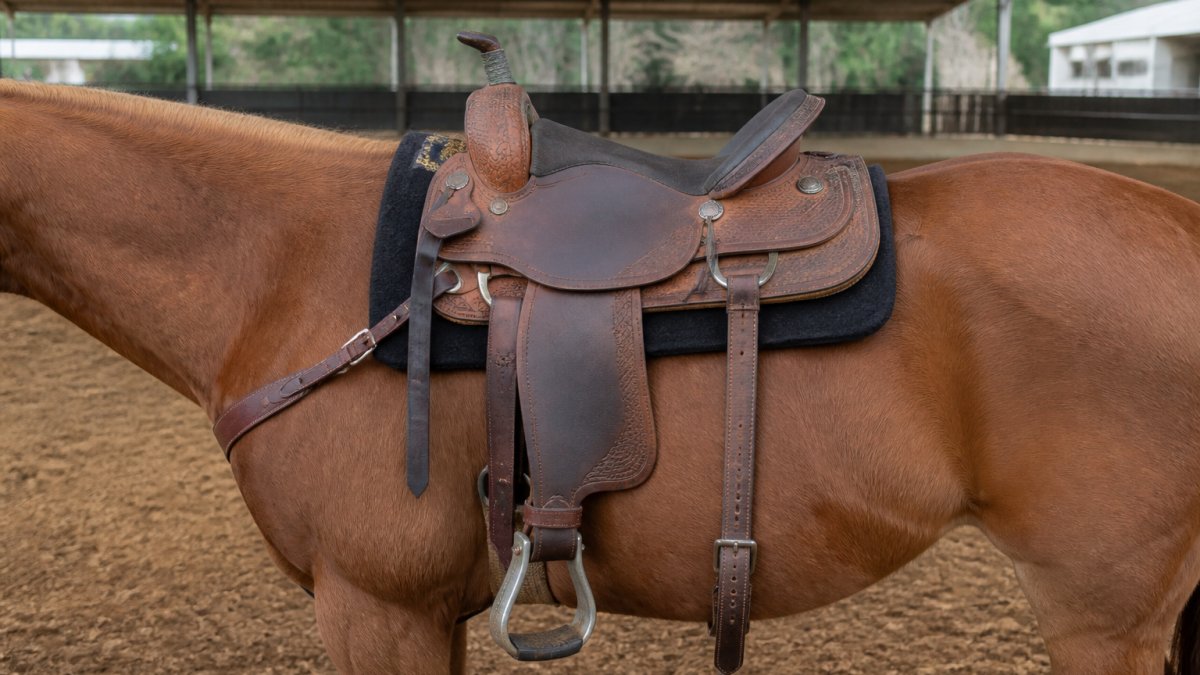
Types of Bits for Barrel Racing
Bit selection is where most riders get it wrong, usually by starting too strong. Begin with the lightest bit your horse respects, because it is very difficult to move backward to a milder option once a horse has learned to brace against a harsher one.
The three broad categories:
- Gag bits, which apply poll pressure and lift the front end
- Solid-mouth or ported bits, for horses that neck rein and respond to steady pressure
- Twisted wire and dogbone designs, for fine-tuning an advanced horse
Gag Bits and When to Use Them
A gag bit works on poll pressure, lifting the horse's shoulder and front end rather than pulling the nose in, a natural fit for barrel racing, where you want the horse elevated and ready to turn.
Our Martha Josey Million Dollar Bit ($76.99) is a gag design built for horses at every stage of barrel training, and it is the bit we recommend first for most riders.

Once a horse is tuned and competing, the Josey-Mitchell 3-Piece Short Lifter Bit ($79.99) is built for advanced horses.
Best Leg Protection for Barrel Racing Horses
Leg protection is not optional for a barrel horse. A single misstep can strike a hind hoof into the back of a front leg.
The Four Types of Boots and What Each One Does
- Splint boots (front). Cover the cannon bone and the inside of the lower leg, protecting against the horse striking itself with the opposite hoof when it crosses over in a tight turn.
- Skid boots (rear). Cover the back of the rear fetlock. When a horse sits down and slides into a turn, the rear fetlock drops close to the ground and can catch the track. A skid boot keeps that from becoming a burn or a cut.
- Bell boots (front). Wrap over the hoof and coronet band, protecting against overreach, a hind hoof clipping the heel of a front hoof, the single most common injury in barrel racing.
- Sport boots (front and rear). A hybrid combining splint-boot coverage with fetlock support and, in some designs, tendon support. Most competitive riders run these front and rear.
Why Boot Choice Follows the Turn
A horse turning a barrel drops its inside shoulder and loads the outside front leg. That outside front fetlock is most likely to take a bad step, and the inside hind is most likely to overreach. If your horse overreaches, bell boots are non-negotiable. If it sits hard and slides, rear skid boots are the priority. If it crosses over, front splint or sport boots save you a vet bill.
What to Look For in a Sport Boot
Three things separate a boot that works from one that does not:
- Coverage where the strike happens. Armor zones over the cannon and fetlock, not just a uniform sleeve.
- Airflow. Neoprene that does not breathe traps heat against the tendon. Perforated or vented designs matter.
- A fit that does not slip. A boot that rotates or slides down in a turn exposes exactly the area it was meant to protect. Check the fit after every run.
For the rider, Shin Guards Tough-1 ($31.95) add neoprene padding and a reinforced plastic strip to protect against hard knocks in the alleyway or at the gate.
Saddle Pads, Cinches, and Stirrups That Hold Up
A saddle pad does more than cushion. A contoured pad follows the horse's back and relieves pressure along the spine; a flat pad bunches and creates rubs.
Martha Josey Million Dollar Bit →
Pair the pad with a cinch that manages heat. The Weaver AirFlex Cinch ($79.59) uses white cool flex foam and an airflow channel to keep heat from being trapped, with padded flex edges that move with the horse.

Stirrups are the piece riders overlook most.
Budget-Conscious vs. Professional-Grade Tack
Budget tack is fine for a beginner horse learning the pattern.
The difference is materials and construction. Professional-grade gear uses heavier hardware, reinforced stitching, and designs tested under real competition conditions.
| Item | Budget Pick | Professional Pick | What You Gain |
|---|---|---|---|
| Bit | Basic gag bit | Martha Josey Million Dollar Bit ($76.99) | Proven training progression, lighter signal |
| Cinch | Standard neoprene | Weaver AirFlex Cinch ($79.59) | Heat management, flex edges, easy cleaning |
| Leg boots | Basic splint boots | Prodigy F3 Sport Boots ($106.99) | Armor zones, airflow, tested construction |
| Stirrups | Steel roper stirrups | Aluminum Bell Stirrups ($80.69) | Less weight, rubber tread grip |
Our advice: buy the best bit and leg protection you can afford first. Those two pieces affect how your horse responds and how sound it stays.

Tack Troubleshooting for Common Behavioral Issues
Most "behavior problems" at the barrel pattern trace back to gear, not attitude.
Saddle slips to one side. Almost always a loose or wrong-sized cinch, or a missing breast collar.
Horse rushes the first barrel. Often a sign the horse is bracing against the bit rather than rating.
Sore back after a run. Check pad contour and saddle bar angle.
Conclusion: Build Your Tack Set With Confidence
Building a tack set for barrel racing is a process, not a single purchase. Start with the pieces that affect soundness and response, then upgrade as your horse advances and your runs get faster.
Lazy B Western Wear & Tack stocks the bits, boots, cinches, stirrups, and reins we recommend here, all from trusted brands we stand behind. Check out our full selection of barrel racing tack and get your horse set up for the next run.
Frequently Asked Questions
What tack do you need for barrel racing?
At minimum you need a barrel racing saddle, a headstall and bit, reins, a breast collar, a contoured saddle pad, a cinch, and leg protection for your horse. Spurs are optional but common. The saddle needs to keep you balanced through tight turns, the bit needs to match your horse's training stage, and boots protect against interference injuries at speed. Start with the essentials and add specialty items as your runs get faster.
How do you choose the right barrel racing saddle?
Check gullet width and saddle bars against your horse's conformation first. A saddle that sits too narrow creates pressure points; too wide and it rocks. Barrel saddles have a deep seat to keep you centered through a turn. Sit in it before you buy if you can, and confirm the skirt length does not interfere with your horse's hip. Fit matters more than brand or price.
Why is leg protection important for barrel racing horses?
Horses running barrels at speed are prone to overreaching and interference injuries, where one hoof strikes another leg. Sport boots with armor zones and breathable neoprene absorb that impact. Bell boots protect the heel and coronet band. Young horses developing coordination and performance horses with an expressive stride benefit most. Preventing an injury costs far less than treating one, and a sound horse stays in competition.
What types of bits are used for barrel racing?
Most barrel racers use gag bits, which apply poll pressure and lift the horse's shoulder for a quicker turn. Mild gag bits suit soft-mouthed horses and green horses; twisted wire or dogbone mouthpieces give more response for advanced horses that need tuning. Start with the lightest bit your horse respects and move up only if needed. It is difficult to move back down once a horse is used to stronger pressure.
How do you troubleshoot tack-related behavioral issues in barrel racing?
If your horse pins its ears at the cinch, the girth may be pinching; try a cinch with flex edges and airflow channels. If your horse throws its head, check bit height and mouthpiece thickness. If it drifts through turns, the saddle may be shifting and a breast collar can stabilize it. If your horse rushes the pattern, the bit may be too strong. Change one piece at a time and note the result.